

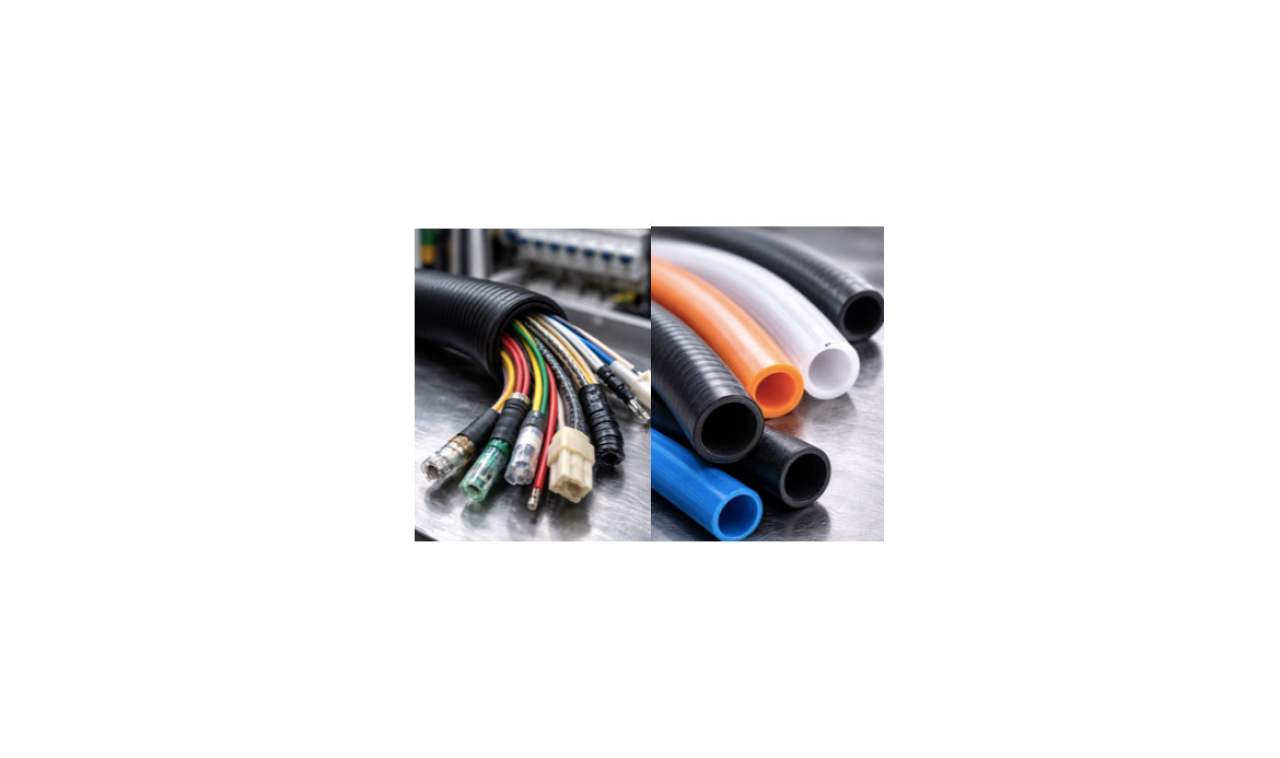
This is where precision extrusion and material expertise become essential.
Extruded insulation tubing is produced in a continuous process in which thermoplastic or elastomer compounds are melted and formed through a circular die to create a uniform tube geometry. The tube is then calibrated and cooled to achieve stable dimensions and consistent wall thickness. For electrical applications, even small deviations can influence dielectric strength, flexibility, or assembly fit, so process control and material stability are critical.
Why Custom Insulation Tubing Matters in Electrical Applications
Electrical insulation tubing serves multiple functions at once: electrical isolation, mechanical protection, strain relief, bundling, and environmental shielding. In many installations—such as control cabinets, vehicles, machinery, or outdoor systems—tubes must remain flexible during routing yet resistant to abrasion, chemicals, and temperature extremes.
Standard catalog tubing often forces compromises in hardness, diameter tolerance, or thermal performance. Custom extrusion eliminates these compromises by matching tubing properties exactly to the application. Inner and outer diameters, wall thickness, flexibility, and material formulation can all be defined according to customer requirements, ensuring optimal fit and long-term reliability.
Advanced Materials for Demanding Conditions
Material selection is one of the most important factors in electrical insulation tubing performance. Beyond conventional PVC, modern extrusion allows the use of engineered compounds designed for specific electrical and environmental demands.
Flexible TPE (thermoplastic elastomers) combine elasticity with thermoplastic processing advantages, making them ideal for bendable protective tubes and cable routing elements. PUR (polyurethane) compounds offer excellent abrasion resistance and mechanical durability, especially in dynamic or high-wear environments such as automation or robotics cabling.
For applications requiring cost efficiency and proven electrical insulation, specially formulated PVC compounds remain widely used. Advanced PVC grades can be optimized for flexibility, flame behavior, or temperature resistance. Certain formulations maintain functional flexibility even at temperatures down to –40 °C, making them suitable for cold-climate or outdoor electrical installations.
By selecting and modifying compounds according to the operating environment, insulation tubing can be engineered to maintain dielectric integrity, flexibility, and mechanical protection throughout its service life.
Precision Dimensions and Customer-Specific Hardness
Electrical insulation tubing must fit precisely over conductors, connectors, or bundles without excessive clearance or installation force. Precision extrusion enables tight control of inner diameter, outer diameter, and wall thickness—even in small or thin-wall tubes.
Another critical parameter is hardness. Depending on installation and movement requirements, tubing may need to be very soft and elastic or comparatively rigid and shape-stable. Through compound selection and formulation, extrusion can deliver virtually any required hardness range, from highly flexible elastomeric tubes to firm technical insulation sleeves.
Because extrusion is inherently scalable, once dimensions and material are defined, tubing can be produced in continuous lengths with consistent quality—from small specialty batches to large production volumes.
Typical Uses Across the Electrical Industry
Custom insulation tubing is used throughout electrical and electronic systems. It protects individual conductors and cable bundles in machinery and automation equipment, provides abrasion-resistant routing in vehicles and transport systems, and insulates connections in control cabinets and electronic assemblies. In outdoor or industrial environments, tubing shields wires from moisture, chemicals, and temperature fluctuations.
In all these cases, reliability depends on matching the tube material and geometry precisely to the operating conditions—something standard tubing cannot always achieve.
Extrusion Expertise Makes the Difference
Producing high-quality electrical insulation tubing requires more than standard extrusion equipment. Stable wall thickness, roundness, and material homogeneity depend on optimized tooling, controlled cooling, and deep understanding of polymer behavior. When tubing is developed in close cooperation with the customer—based on drawings, specifications, or samples—performance and manufacturability can be aligned from the start.
This collaborative approach allows electrical manufacturers and system integrators to obtain insulation tubes that fit perfectly, perform reliably, and integrate smoothly into their products and assembly processes.
Custom extruded insulation tubing—engineered in PUR, TPE, or advanced PVC compounds, with customer-defined hardness, dimensions, and temperature performance—ensures dependable electrical protection in demanding applications.
Learn more about our custom electrical insulation tubing extrusion:
https://stp-extrusion.com